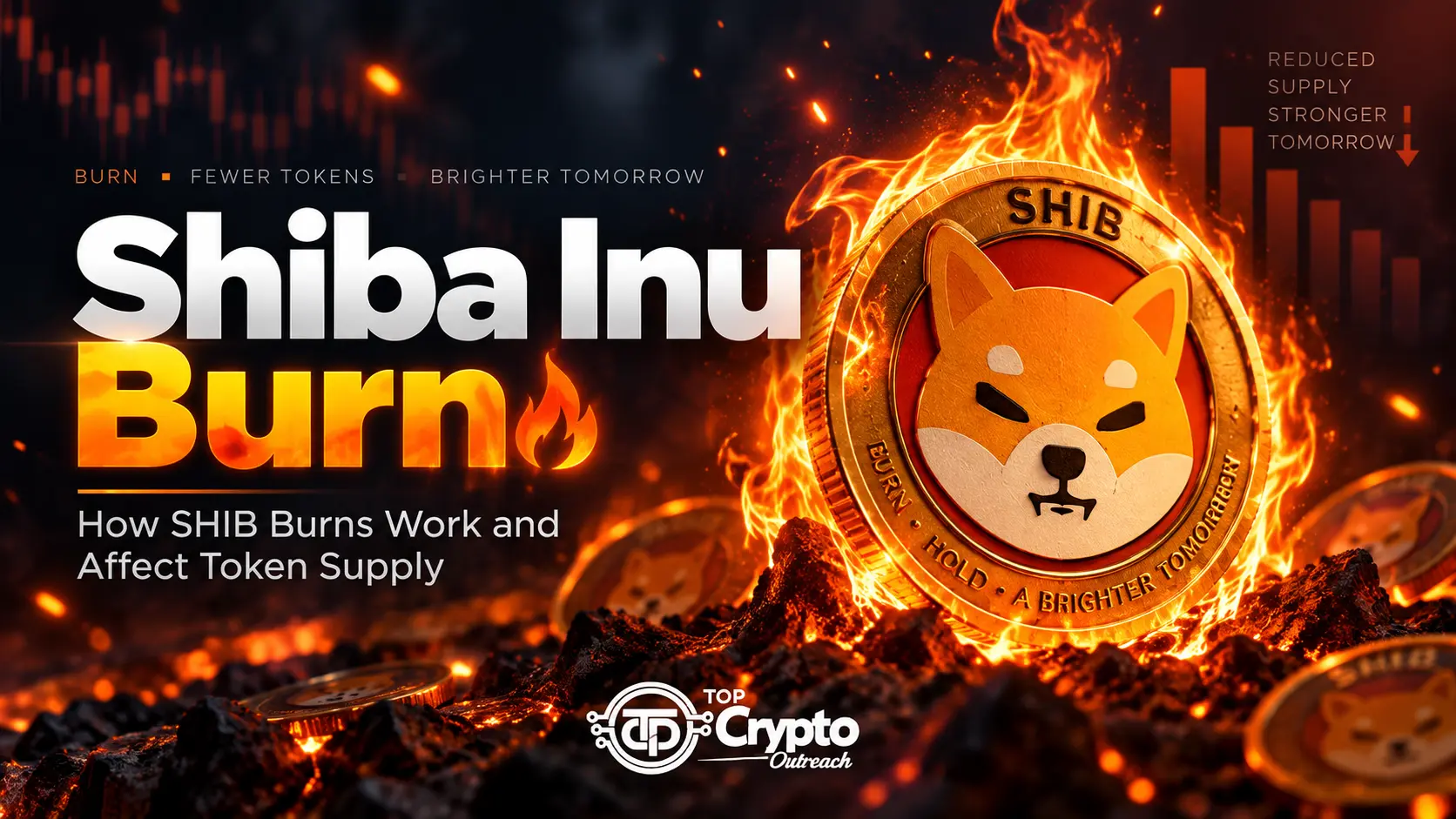
Shiba Burn: How SHIB Burns Work and Affect Token Supply
Shiba Inu has an enormous token supply, so burning has become one of the most discussed parts of the SHIB ecosystem. A Shiba burn removes tokens from usable circulation by sending them to addresses from which they cannot normally be spent again. That sounds simple, but burn-rate headlines can make the effect appear larger than it really is. Understanding the actual number of tokens burned, the remaining supply, and the role of Shibarium gives a much clearer picture.
A Shiba Inu burn makes SHIB tokens permanently inaccessible, reducing the amount that can circulate. Burns may come from community activity or ecosystem mechanisms connected with Shibarium. However, a rising burn rate does not automatically mean a major supply change or price increase. The number of tokens burned and the remaining supply matter more than percentage headlines alone.
What Is a Shiba Inu Burn?
A Shiba Inu burn is the process of permanently removing SHIB tokens from usable circulation. In practice, tokens are sent to a burn or “dead” address from which they are not expected to be recovered or spent. Once SHIB reaches such an address, those tokens are effectively taken out of the accessible supply.
Token burning is not unique to Shiba Inu. Crypto projects can use burns for different reasons, but the basic concept is similar: a quantity of tokens is made permanently unusable. For SHIB, burns receive particular attention because the token has a very large supply, so holders often focus on whether continued burning could meaningfully reduce that supply over time.
The official Shiba Inu burn mechanism also provides a way to follow ecosystem-related burn activity. The important point is that a genuine token burn is an on-chain event rather than simply an announcement that tokens have been removed
How Does the SHIB Burn Process Work?
At the simplest level, the process begins when SHIB is transferred to a recognized burn address. A normal crypto wallet is controlled through credentials that allow its owner to move its tokens later. A burn address, by contrast, is used so that the tokens sent to it become inaccessible for normal use.
The transfer itself remains recorded on the blockchain. This means people can inspect the transaction, see the amount transferred, and examine the destination address. That transparency is important because it allows burn claims to be checked against blockchain records instead of relying only on social-media posts or attention-grabbing headlines.
Burning does not erase the historical record of those tokens from the blockchain. Instead, it removes their practical usability. The transaction remains visible, while the burned SHIB can no longer take part in normal transfers, trading, or other circulation.
What Is a SHIB Burn Wallet?
“Burn wallet” and “dead wallet” are common terms used for addresses intended to make tokens inaccessible. These should not be confused with ordinary wallets that simply have not moved their holdings for a long time.
A dormant wallet could still have an owner capable of accessing its tokens. Tokens sent to a recognized burn address are different because the purpose of the transfer is permanent removal from usable circulation. When evaluating a claimed burn, checking the destination and transaction is therefore more useful than relying on a headline alone.
What Does the SHIB Burn Rate Mean?
The SHIB burn rate generally describes how burn activity has changed compared with an earlier period. For example, a burn tracker may compare the amount of SHIB burned during one day with the amount burned during the previous day and present the difference as a percentage.
This is where dramatic figures can become misleading. Imagine that 100,000 SHIB were burned during one period and 500,000 during the next. The second figure is five times larger, so the percentage increase looks substantial. However, 500,000 tokens could still represent a tiny fraction of the overall SHIB supply.
For that reason, a reported increase of 500%, 1,000%, or even more should not be interpreted by itself. Readers should ask four questions: How many tokens were actually burned? What period is being compared? How small was the starting figure? How large is the burn compared with the remaining supply?
A burn-rate percentage tells you how activity changed between two periods. It does not by itself show whether enough SHIB was removed to materially alter overall supply.
Why Are SHIB Tokens Burned?
The most direct effect of burning SHIB is supply reduction. Once tokens become permanently inaccessible, they cannot be sold, transferred, or used as part of the active token supply. In theory, a smaller supply can contribute to greater scarcity if other conditions remain favorable, but scarcity alone does not determine a token’s market value.
SHIB burns can come from community-led activity as well as mechanisms associated with the wider Shiba Inu ecosystem. Different burn activities may use different processes, but the important measurable outcome is the quantity of SHIB that is permanently made inaccessible.
Burning also has a strong community dimension. Because SHIB began with a huge number of tokens, supply reduction has remained a recurring subject among its community. That does not make every individual burn economically significant. A burn can be genuine while still being very small compared with the supply that remains.
How Does Shibarium Connect With SHIB Burns?
Shibarium is a blockchain network within the broader Shiba Inu ecosystem and is connected to Ethereum. Its network currency is BONE, according to the official Shibarium documentation. That distinction matters because it would be inaccurate to describe every transaction conducted on Shibarium as a direct SHIB burn.
The official Shiba Inu burn portal, known as ShibTorch, connects ecosystem activity with a process through which BONE accumulated for burning can ultimately contribute to SHIB being burned. The official portal describes a process in which BONE designated for burning is used in a conversion process, and SHIB is then burned.
This makes Shibarium relevant to the SHIB burn system, but the relationship should be described accurately. It is not simply a case of every transaction automatically taking the equivalent number of SHIB out of circulation.
There is another important distinction. Tokens may also be described as “burned” when moving assets across a blockchain bridge. According to the Shibarium bridge documentation, tokens moving from Shibarium back to Ethereum can be burned on Shibarium while corresponding tokens are unlocked on Ethereum. In that process, the bridge is designed to keep overall circulating supply unchanged.
A bridge burn is therefore not the same thing as permanently removing SHIB from overall usable supply. Understanding which type of burn is taking place prevents two technically different processes from being confused.
Do SHIB Burns Reduce the Circulating Supply?
A genuine permanent SHIB burn removes spendable tokens from circulation. The practical significance of the reduction depends on how many tokens are burned compared with how many remain.
| Term | What It Means |
| Total Supply | The broader quantity of tokens included in the token’s supply accounting |
| Circulating Supply | Tokens considered available in public circulation |
| Burned Tokens | Tokens permanently made inaccessible through a burn |
| Shiba Burn Rate | A measure of how burn activity changes over a selected period |
Consider a simplified example. If a hypothetical token had one billion circulating units and 10 million were permanently burned, that would represent a noticeable percentage reduction. If only 10,000 were burned, the supply would still move downward, but the proportional effect would be far smaller.
The same logic is particularly important with SHIB because its supply is measured on an unusually large numerical scale. A burn involving millions of tokens can sound enormous in isolation while still representing a very small fraction of the broader supply.
That is why both raw token counts and percentages require context. A useful analysis asks how much supply was actually removed rather than judging the importance of an event by the largest number in the headline.
Do SHIB Burns Increase the Price?
Burning SHIB can reduce supply, but it does not produce an automatic increase in price. Crypto prices emerge from interaction between supply and demand, and demand can change independently of token-burning activity.
Liquidity, trading activity, broader crypto-market conditions, ecosystem usage, market sentiment, and the willingness of buyers and sellers to transact can all affect price. A change in one supply variable therefore cannot reliably determine what the market will do next.
The size of the burn also matters. A permanent reduction representing a meaningful share of supply is very different from a burn representing only a tiny fraction of outstanding tokens. This is why “the burn rate increased” and “SHIB must increase in price” are two separate statements.
It is more accurate to view burning as one token-supply mechanism. It can alter the supply side of the equation, but it cannot determine future demand or guarantee a particular valuation.
Could Token Burns Help SHIB Reach $1?
Burns frequently appear in discussions about whether SHIB could eventually trade at much higher prices. Mathematically, reducing circulating supply means that a particular token price would correspond to a lower market capitalization than it would with a larger supply. The critical issue, however, is the scale of the required supply reduction.
A short-term rise in the SHIB burn rate cannot answer the $1 question by itself. Readers interested in the larger supply and market-cap mathematics can see our detailed analysis of Will Shiba Inu Coin Reach $1? rather than treating burn-rate headlines as price forecasts.
That distinction keeps the two questions separate. A burn analysis explains how tokens can leave circulation, while a $1 analysis considers supply alongside market capitalization and the scale required for a specific hypothetical price.
How to Read Shiba Burn Headlines Correctly
SHIB burn stories often emphasize whichever number looks most dramatic, particularly the percentage increase. A more useful approach is to check several pieces of context before deciding whether a reported burn is actually significant.
- Check the actual number of Shiba burned. A huge percentage can result from an extremely small starting figure.
- Check the comparison period. Daily, weekly, and longer-term comparisons may produce very different percentages.
- Compare the burn with the remaining supply. This helps show whether the reduction is material or proportionally tiny.
- Look for verifiable transaction data. A genuine token burn should leave an on-chain record.
- Separate permanent burns from bridge mechanics. A mapped token burned during a cross-chain withdrawal does not necessarily reduce the overall supply.
- Do not assume a price outcome. Burn activity is only one variable affecting a token market.
These checks turn an attention-grabbing statistic into something measurable. They also help distinguish a meaningful supply event from a percentage spike caused mainly by an unusually small previous-period burn.
FAQs
What does Shiba burn mean?
A Shiba Inu burn means SHIB tokens are transferred in a way that makes them permanently inaccessible for normal use. Once properly burned, those tokens cannot return to ordinary circulation, which reduces the amount of usable SHIB.
Where do burned SHIB tokens go?
Burned SHIB is sent to designated burn or dead addresses. The blockchain transaction remains publicly recorded, but the tokens at those addresses are considered inaccessible rather than available for normal transfer or trading.
Does burning SHIB reduce its circulating supply?
A genuine permanent burn reduces the amount of SHIB that can circulate because the burned tokens can no longer be used. The significance of that reduction depends on the amount burned relative to the much larger supply that remains.
What does a high SHIB burn rate actually mean?
A high SHIB burn rate generally means considerably more tokens were burned than during the comparison period. It does not necessarily mean a large percentage of SHIB’s overall supply disappeared. The absolute token amount, time period, and remaining supply should always be considered alongside the percentage.
Does Shibarium burn SHIB tokens?
Shibarium is connected with an ecosystem process that can result in SHIB being burned, but it is more specific than saying every Shibarium transaction burns SHIB. Official Shiba Inu materials describe accumulated BONE designated for burning being used through a process that ultimately burns SHIB. This is also different from bridge-related token burns that preserve supply across networks.
Final Thoughts
Shiba burn can genuinely make tokens permanently inaccessible and reduce usable supply, but their scale matters more than dramatic percentage headlines. Looking at the actual number burned, comparison period, remaining supply, and burn mechanism provides a much more accurate picture of what a Shiba Inu burn really means.