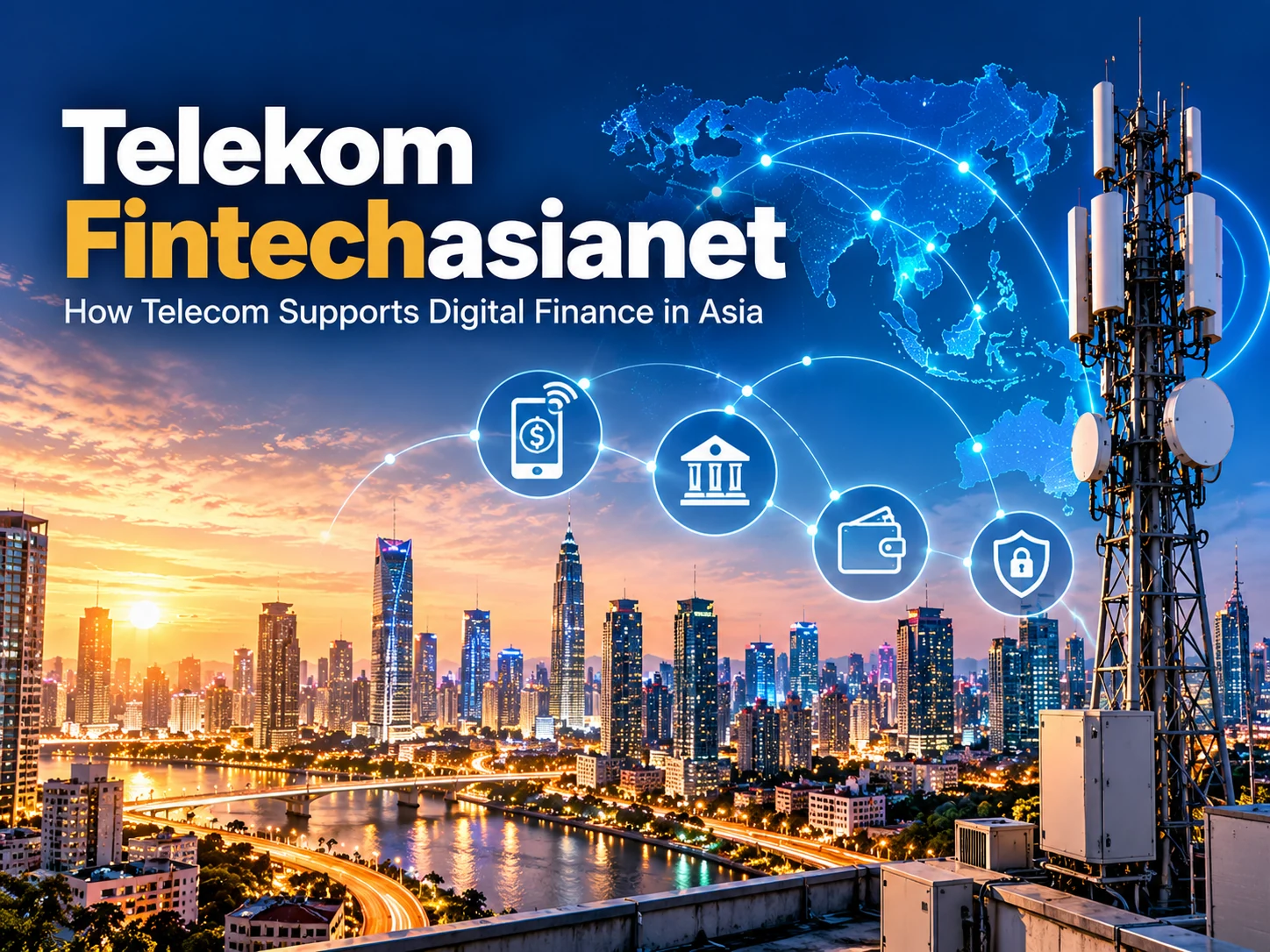
Telekom Fintechasianet: How Telecom Supports Digital Finance in Asia
Mobile networks have become an important part of how people access banking, digital payments, and financial services across Asia. As financial technology becomes increasingly mobile, telecommunications infrastructure helps connect customers with digital wallets, payment platforms, and online financial systems. The term Telekom Fintechasianet appears in discussions about this relationship between telecom and fintech. Understanding that connection helps explain how connectivity, identity verification, mobile money, and secure financial technology are changing access to financial services.
Telekom Fintechasianet is a term associated with telecommunications and financial technology in Asia. It commonly appears in discussions about mobile payments, digital wallets, telecom data, identity verification, and financial inclusion. Telecom networks support digital financial services through connectivity, authentication, and payment infrastructure, although the term does not establish a single verified financial institution or product.
What Is Telekom Fintechasianet?
Telekom Fintechasianet is a search phrase commonly associated with the relationship between telecommunications and financial technology, particularly in Asian markets. Online discussions using the term cover mobile banking, telecom infrastructure, digital payments, financial security, and technology-driven financial services.
The phrase should not automatically be interpreted as the name of a licensed bank, payment provider, or established fintech platform. Related names also appear on informational websites discussing telecom and finance, but similarities between those names do not establish common ownership or official business relationships.
The broader subject is the growing connection between communication networks and financial systems. Telecom operators provide mobile connectivity, subscriber services, and certain network capabilities, while financial institutions develop applications that use these capabilities to serve customers.
Understanding this distinction makes it easier to evaluate claims about telecom-fintech partnerships without confusing an informational keyword with a confirmed financial organization.
Why Telecommunications Matter in Digital Finance
Digital financial services depend on reliable communication infrastructure. When customers open mobile banking applications, make digital payments, or access financial accounts, their devices generally need a secure connection to the relevant financial platform.
Telecommunications networks provide much of this connectivity through mobile broadband, messaging systems, and network-based services. Financial institutions handle transactions, account management, and regulatory responsibilities through their own systems or authorized service providers.
The importance of this relationship becomes clearer when examining mobile money globally. According to GSMA’s 2026 industry report, mobile-money services processed approximately $2.1 trillion in transactions during 2025, while registered mobile-money accounts reached 2.3 billion worldwide.
These figures demonstrate the scale of mobile financial services, although they should not be treated as statistics exclusively for Asia. The region includes diverse markets where mobile banking, digital wallets, and electronic payment infrastructure have developed in different ways.
How Telecom Networks Support Digital Financial Services
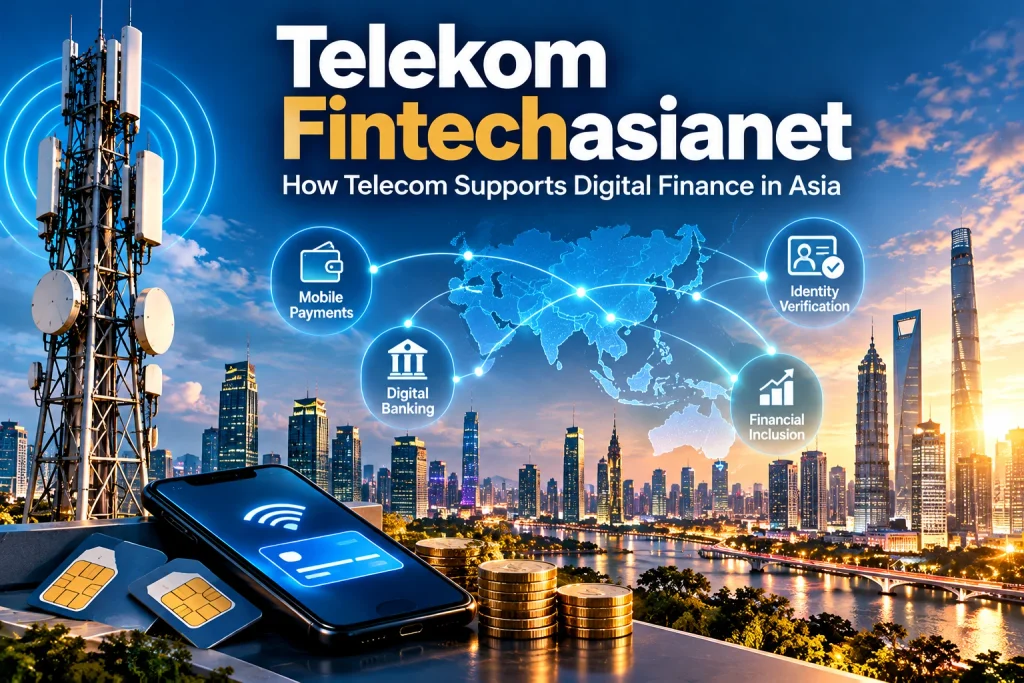
Telecommunications and fintech interact through several technologies that support access, authentication, communication, and transaction delivery. Their roles are connected, but not identical, because a mobile network does not necessarily process or regulate the financial transaction itself.
Mobile Payments and Digital Wallets
Mobile payment applications allow users to send money, receive payments, and access financial information through connected devices. Telecom infrastructure supports communication between smartphones, financial applications, payment processors, and service providers.
In Asia, digital wallets serve different purposes depending on local payment systems and consumer needs. Some support merchant payments and everyday transfers, while others integrate with banking services or broader financial platforms.
Reliable connectivity makes these services more accessible, particularly where smartphones are the main gateway to the internet. However, the availability of a mobile signal alone does not guarantee access to financial services, since customers may also need identification, a supported account, and an eligible payment provider.
Mobile Identity and Account Verification
Financial institutions need reliable ways to verify users, protect accounts, and reduce unauthorized access. Mobile network capabilities can help support these processes when appropriate safeguards and permissions are in place.
For example, GSMA Open Gateway includes a Number Verification API that can help an application confirm whether a phone number matches the device accessing its service. Related APIs address SIM-swap information and customer identity matching.
These technologies can strengthen certain verification workflows, but they do not replace every other security measure. Financial providers still need appropriate authentication, fraud monitoring, data protection, and regulatory compliance procedures.
SMS, USSD and Mobile Communication
Not every mobile financial service requires an advanced smartphone application. SMS and USSD-based systems can provide basic interactive functions through supported mobile networks, depending on the service and country.
These communication channels have historically helped expand access to financial services where internet connectivity or smartphone ownership is limited. They can support activities such as receiving transaction notifications, checking certain account details, or accessing supported mobile-money functions.
Their capabilities and security protections vary, so they should not be assumed to offer the same experience as modern banking applications. Nevertheless, they remain relevant when examining how telecom infrastructure can support broader financial participation.
How Telecom Data Can Support Fraud Prevention
Telecom-related information can help financial providers identify certain risks associated with digital accounts and transactions. Examples include recent SIM changes, mobile-number verification results, and device-related signals made available through authorized network services.
A recent SIM swap, for instance, may justify additional verification during a sensitive account action. However, a SIM change is not proof of fraud because customers legitimately replace SIM cards or devices.
The value of these signals lies in combining them with other relevant evidence rather than treating any single indicator as a definitive decision. Appropriate authentication, account monitoring, and customer support remain essential.
Responsible use also requires clear purposes, proportionate data collection, lawful processing, and suitable security controls. Telecom-fintech integration should help protect customers without creating unnecessary surveillance or allowing broad access to private communications.
Can Telecom Data Improve Credit Assessment?
Credit assessment presents another potential application for telecom-related data, particularly where applicants have limited conventional financial records. Some alternative-data approaches examine relevant payment or account information to supplement traditional credit histories.
However, mobile activity is not the same as financial capacity. Frequent phone usage, regular recharges, or a long-standing mobile account cannot independently establish whether someone can afford a loan or repay it reliably.
A fair credit assessment needs to consider appropriate financial information, including income, expenses, existing obligations, and repayment capacity. Any additional telecom-related signals should be relevant, legally obtained, and evaluated for accuracy and potential bias.
For this reason, Telekom Fintechasianet discussions about credit assessment should distinguish possible data applications from proven lending outcomes. Greater access to data does not automatically mean more accurate, fair, or inclusive financial decisions.
Real-World Applications of Telecom and Fintech Integration
The connection between telecommunications and financial technology extends beyond digital banking. It can support various services that require connectivity, customer verification, and secure communication.
| Application | Role of Telecom Technology | Financial Use |
|---|---|---|
| Digital wallets | Mobile internet connectivity | Payments and transfers |
| Mobile banking | Secure communication channels | Remote account access |
| Number verification | Network-based identity signals | Account authentication |
| SIM-swap detection | Relevant SIM-change information | Fraud-risk assessment |
| Mobile money | Mobile network and service access | Transfers and payments |
| Digital lending | Authorized identity and account signals | Customer onboarding and risk checks |
| Payment notifications | Messaging infrastructure | Transaction updates |
These applications illustrate different ways telecom infrastructure may contribute to financial services. They do not imply that every telecom operator offers each capability or that all financial institutions use the same technical arrangements.
The actual implementation depends on network availability, supported APIs, commercial partnerships, customer permissions, and applicable regulations.
How Telecom Supports Financial Inclusion in Asia
Financial inclusion refers to improving access to useful and appropriate financial services, particularly for people who have difficulty accessing traditional banking channels.
Mobile connectivity can reduce some access barriers by allowing customers to use digital services without repeatedly visiting physical branches. This can be valuable in rural communities and locations where banking infrastructure is less widely available.
Nevertheless, mobile connectivity is only one requirement. Digital literacy, affordability, suitable identification, reliable consumer protection, and accessible financial products are also necessary for meaningful inclusion.
Asian markets differ considerably in their payment systems, regulations, infrastructure, and levels of digital adoption. An approach that works well in one country may not be appropriate elsewhere without adapting to local conditions.
These differences are also part of the wider FTAsiaEconomy financial trend, where digital infrastructure and financial access interact with economic development and technology investment.
Privacy, Security and Regulatory Challenges
Telecom-fintech integration creates opportunities, but it also introduces challenges related to personal information, security, and regulatory responsibilities.
Financial and telecom data may be particularly sensitive when combined. Organizations should collect only information necessary for clearly defined purposes and apply appropriate access controls, retention policies, and data-protection practices.
Another concern involves automated decision-making. Systems that use telecom-related signals may produce unfair outcomes if they rely on inaccurate information or reflect existing biases. Human oversight, testing, and mechanisms for correcting mistakes can help address these risks.
Cybersecurity also remains important because mobile-based financial services can face account takeover attempts, phishing, SIM-swap attacks, and other threats. Strong verification practices and secure system design are therefore essential.
Finally, requirements differ between jurisdictions. A telecom-fintech arrangement that is permissible in one Asian market may require different authorizations, controls, or safeguards in another.
Where Blockchain and Cryptocurrency Fit
Blockchain and cryptocurrency form a separate but related part of the digital-finance ecosystem. Mobile connectivity allows customers to access cryptocurrency wallets, blockchain applications, and digital-asset services through connected devices.
However, telecommunications networks do not automatically provide blockchain settlement or guarantee cryptocurrency transaction security. Those functions depend on the relevant blockchain, wallet software, service providers, and transaction mechanisms.
Blockchain technology may also be used for certain payment, tokenization, or record-management applications, but these should be evaluated individually rather than presented as universal replacements for conventional financial systems.
Readers exploring the broader relationship between digital assets and financial technology can examine FintechAsia Net Crypto Facto for additional cryptocurrency-focused context.
The important distinction is that telecom provides connectivity and selected network services, while cryptocurrency systems follow their own technical, financial, and regulatory structures.
What Could Shape Telecom and Fintech Integration Next?
Future developments are likely to depend on improvements in connectivity, interoperable network APIs, digital identity services, payment infrastructure, and cybersecurity.
Standardized APIs may make it easier for authorized financial applications to access supported telecom capabilities without building entirely different integrations for each network. However, the availability of these services still depends on individual operators, markets, and commercial arrangements.
Greater use of automation and digital identity systems may also change customer onboarding and fraud monitoring. Any benefits will depend on reliable implementation, privacy protections, transparency, and fair access.
The long-term importance of Telekom Fintechasianet as a search topic therefore lies in understanding how communication infrastructure and financial technology interact, rather than assuming that every emerging technology will automatically transform banking.
FAQs
What does Telekom Fintechasianet mean?
Telekom Fintechasianet is a phrase associated with the relationship between telecommunications and financial technology in Asia. It appears in discussions about digital payments, mobile banking, telecom infrastructure, and financial security, but should not automatically be treated as a verified financial company.
How do telecom networks help digital banking?
Telecom networks provide connectivity and communication services that allow users to access supported banking applications, receive notifications, complete certain authentication steps, and communicate with financial platforms.
Can telecom data help prevent financial fraud?
Yes, selected telecom signals such as phone-number verification and recent SIM-change information can support fraud-risk assessment. These indicators should be combined with other security measures rather than used as conclusive evidence of fraud.
Is Telekom Fintechasianet a bank or cryptocurrency?
The phrase itself does not establish a licensed bank or cryptocurrency. It is used in online discussions about telecom and financial technology, so claims about a specific institution, service, or digital asset require independent verification.
How does telecom technology improve financial inclusion?
Mobile connectivity can help people access payment platforms, account information, and supported financial services remotely. Its impact also depends on affordability, digital literacy, consumer safeguards, and local financial infrastructure.
Are telecom-fintech services the same across Asia?
No. Different countries have their own payment systems, financial regulations, telecom infrastructure, identity requirements, and levels of digital adoption. Services and partnerships therefore vary considerably between markets.
Final Thoughts
Telekom Fintechasianet highlights the growing relationship between telecommunications and financial technology across Asia. Mobile connectivity, digital payments, identity verification, and secure network services can support wider financial access, but meaningful progress also depends on privacy, regulation, reliable infrastructure, and responsible implementation.