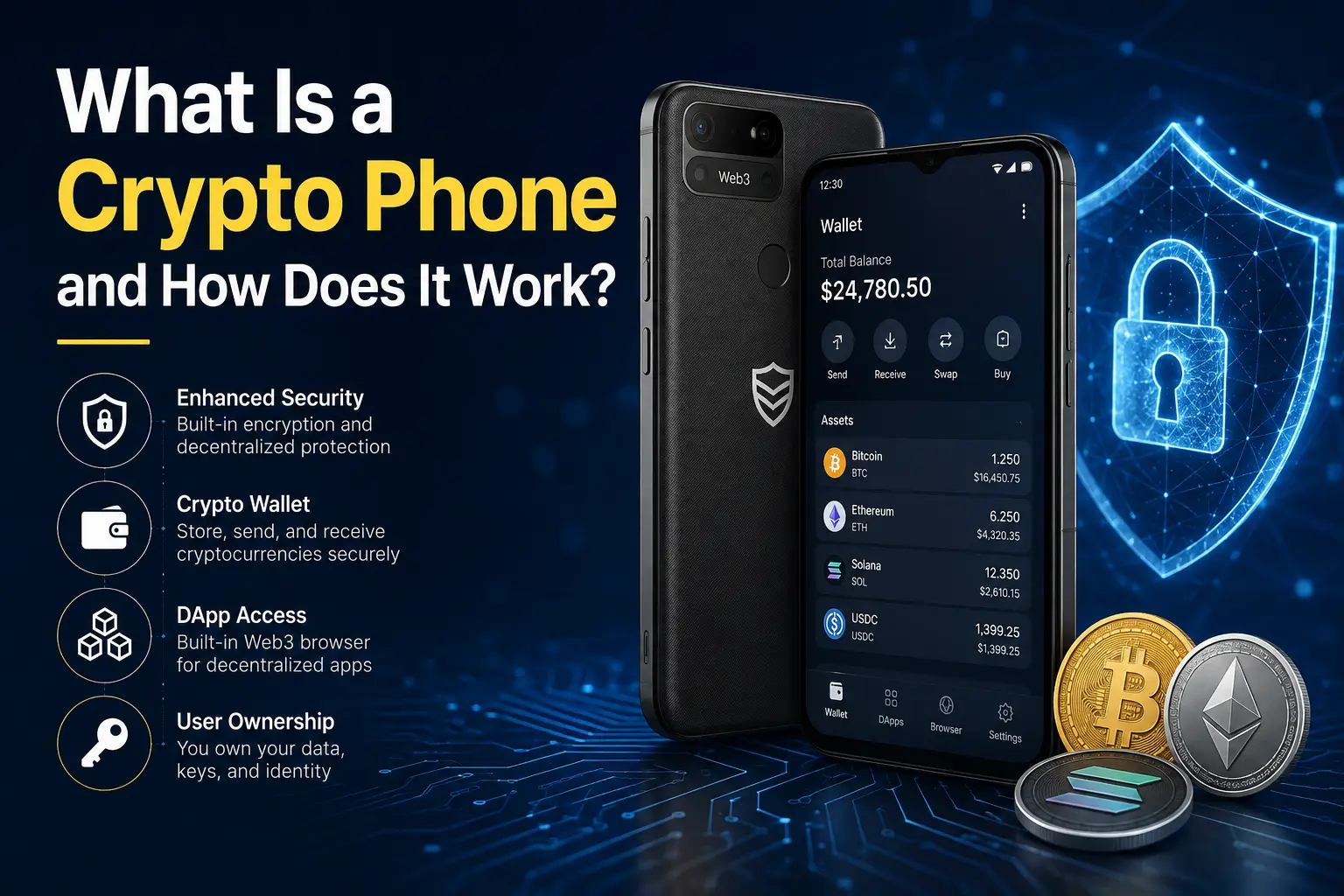
What Is a Crypto Phone and How Does It Work?
A crypto phone is still a smartphone, but it is designed with extra features for cryptocurrency and Web3 use. These may include integrated wallets, hardware-backed private-key protection, transaction-signing tools, or easier access to decentralized applications. A regular smartphone can already run crypto apps, so the real difference is deeper integration rather than basic compatibility. This guide explains what a crypto phone is, how it works, its security model, practical uses, benefits, limitations, and how it compares with normal phones and hardware wallets.
A crypto phone is a smartphone with crypto-focused hardware or software that can make wallet management, blockchain transactions, and Web3 apps more integrated. Cryptocurrency itself is not physically stored inside the phone. Instead, the device may protect the private keys used to control blockchain assets and authorize transactions. Features vary between models, so some focus on secure key storage while others emphasize dApps, wallets, payments, or blockchain-native mobile experiences.
What Is a Crypto Phone?
A crypto phone, also called a crypto smartphone, blockchain phone, or Web3 phone, is a mobile device designed to make cryptocurrency and blockchain applications easier to use. There is no universal technical standard every crypto phone must meet. One model may include specialized hardware for protecting private keys, while another may focus on wallet integration, a crypto-focused app ecosystem, or smoother communication between wallets and decentralized applications. Almost any modern smartphone can install a crypto wallet or access an exchange. A purpose-built crypto phone tries to go beyond that basic capability by integrating crypto functions more deeply into the device.
How Does a Crypto Phone Work?
At a basic level, a crypto phone works like any other smartphone. It runs an operating system, connects to the internet, installs applications, and provides normal features such as messaging, browsing, cameras, and mobile payments.
The crypto-specific layer usually relates to wallets and transaction signing. When a user wants to send a cryptoasset or interact with a blockchain application, the wallet creates a transaction request. The user reviews and approves it, and the private key signs the transaction before it is sent to the blockchain network.
The phone does not usually store cryptocurrency the way it stores photos or documents. Blockchain assets remain recorded on the blockchain. The phone or wallet manages the keys that allow the user to control those assets. Some crypto phones place key-related operations inside an isolated hardware or secure execution environment, reducing the exposure of sensitive key material to ordinary applications.
What Makes a Crypto Phone Different?
Hardware-Backed Key Protection
Some crypto phones use specialized hardware or protected execution environments so sensitive key material is not handled like normal app data. This can make direct access by other applications more difficult, although it does not make the whole device immune to attacks.
Integrated Crypto Wallets
A crypto phone may connect wallet functions more closely with authentication, transaction approval, and Web3 applications. The aim is to reduce friction while keeping key management better separated from ordinary app activity.
Easier Transaction Signing
On a normal phone, users may move between a browser, dApp, and wallet app to approve a transaction. A crypto-focused phone may streamline that process, but users still need to review what they are signing.
dApp and Web3 Access
Some crypto phones provide dedicated access to decentralized applications, or dApps. These can include wallets, blockchain games, digital collectible platforms, decentralized finance tools, and other blockchain services.
Crypto Phone vs Normal Smartphone
A normal smartphone can already install a wallet, access an exchange, use browser-based dApps, and send or receive crypto. The difference is mainly the level of integration.
| Feature | Crypto Phone | Normal Smartphone |
| Regular mobile apps | Yes | Yes |
| Crypto wallet apps | Yes | Yes |
| Crypto-focused key protection | May be built in | Depends on device and wallet |
| dApp integration | May be deeper | Usually app- or browser-based |
| Transaction signing | Often more integrated | Usually handled through wallet apps |
| General smartphone use | Yes | Yes |
A crypto phone is therefore not required simply because someone owns cryptocurrency. Its value is providing a more purpose-built environment for frequent blockchain interactions.
Crypto Phone vs Hardware Wallet
Crypto phones and hardware wallets can both help protect private keys and approve transactions, but they are different devices. A crypto phone is a general-purpose, internet-connected smartphone used for communication, apps, browsing, media, and crypto. A hardware wallet is a specialized device primarily designed to protect keys and authorize transactions.
Neither is automatically the correct choice for every user. The appropriate setup depends on transaction frequency, convenience, the value being protected, security practices, and the user’s threat model. Some users may prefer a crypto phone for everyday Web3 activity, while others may use a normal phone with a dedicated hardware wallet.
Examples of Crypto Phones
HTC Exodus
HTC Exodus was an early blockchain-focused smartphone that explored separating crypto key management from the normal Android environment.
Solana Saga
Solana Saga combined regular Android smartphone functionality with crypto-focused wallet, transaction, and application features.
Solana Seeker
Solana Seeker represents a newer generation of the same idea, combining Android with crypto-focused key protection, wallet connectivity, and a dedicated dApp ecosystem. These examples show that “crypto phone” is not one fixed specification. Different devices can emphasize different combinations of security, wallet integration, and Web3 access.
What Can You Use a Crypto Phone For?
Typical uses can include:
- Managing a self-custodial wallet
- Sending and receiving supported cryptoassets
- Signing blockchain transactions
- Connecting a wallet to dApps
- Using Web3 applications
- Accessing blockchain games
- Managing digital collectibles
- Using supported crypto payment features
Exact capabilities depend on the device, wallet, blockchain network, and applications involved.
Benefits of a Crypto Phone
More Integrated Crypto Experience
A dedicated crypto phone can reduce some of the friction involved in moving between wallets, browsers, and blockchain applications.
Purpose-Built Key Management
Specialized key-protection systems can isolate private keys from normal application environments. This does not remove every security risk, but it can improve how sensitive credentials are handled.
Easier Web3 Access
Crypto phones may provide a more direct route to dApps and other blockchain services, which can be useful for frequent on-chain users.
Mobile Self-Custody
Some users prefer to control their own wallet keys rather than rely entirely on a third party. A crypto phone can make mobile self-custody more convenient, but it also increases responsibility for recovery and transaction approval.
Are Crypto Phones Safe?
Crypto phones can include useful security features, but they are not completely secure or unhackable. Hardware-backed key protection can help isolate private keys, yet many crypto losses do not begin with an attacker directly extracting a key. Users can still face:
- Phishing websites
- Fake wallet applications
- Malicious dApps
- Social engineering
- Recovery-phrase theft
- Device theft
- Weak authentication
- Incorrect transaction approvals
- User mistakes
A private key may be protected by specialized hardware while the user still approves a fraudulent transaction because a fake website appears legitimate. That is why key security and overall crypto security should be treated as related but separate issues. Device design helps, but careful user behaviour remains essential.
Limitations of Crypto Phones
Crypto phones are not automatically better than mainstream smartphones. Many users simply do not need their specialized features. Someone who checks a portfolio occasionally or sends crypto only a few times a year may be comfortable with a normal smartphone and established wallet apps.
Crypto-specific ecosystems can also be smaller. App compatibility, software support, device availability, and long-term updates may vary between manufacturers. A crypto phone also remains internet-connected, so it still has an online attack surface. Self-custody adds responsibility because users must protect recovery information, understand what they sign, and have a recovery plan if the phone is lost or damaged.
Do You Actually Need a Crypto Phone?
A crypto phone may make more sense for someone who:
- Regularly uses mobile dApps
- Frequently signs blockchain transactions
- Values integrated self-custody
- Participates heavily in a Web3 ecosystem
- Develops or tests blockchain applications on mobile
A normal smartphone may be enough for someone who:
- Uses crypto occasionally
- Mainly checks balances
- Uses a small number of established wallet apps
- Does not need dedicated Web3 functionality
The decision is less about whether you own crypto and more about how deeply crypto is part of your normal mobile activity.
Common Misconceptions About Crypto Phones
Crypto Is Stored Inside the Phone
Not literally. Blockchain assets remain recorded on the blockchain. The phone primarily manages the keys used to control them.
You Need a Crypto Phone to Use Cryptocurrency
You do not. Normal smartphones can install wallets, access exchanges, and interact with many blockchain applications.
A Crypto Phone Cannot Be Hacked.
No smartphone is immune to every attack. Crypto-specific security can protect certain functions, but phishing, malicious software, social engineering, and user error remain risks.
A Crypto Phone Is the Same as a Hardware Wallet
Not necessarily. A crypto phone is a multifunction smartphone, while a hardware wallet is a specialized device focused on key protection and transaction authorization.
Frequently Asked Questions
What Is a Crypto Phone?
A crypto phone is a smartphone with additional cryptocurrency or Web3 features, such as integrated wallet functionality, hardware-backed key protection, transaction signing, or easier dApp access.
How Does a Crypto Phone Store Cryptocurrency?
Cryptocurrency is recorded on the blockchain. The phone or wallet manages the private keys or credentials that allow the user to control and transfer those assets.
Is a Crypto Phone Safer Than a Normal Phone?
It may provide stronger protection for certain crypto-specific functions, especially private-key management. Overall safety still depends on the device, wallet software, applications, recovery practices, and user behaviour.
Can You Use Crypto on a Normal Smartphone?
Yes. Normal smartphones can run crypto wallets, exchange apps, and many dApps. A dedicated crypto phone mainly provides deeper crypto integration.
Is a Crypto Phone the Same as a Hardware Wallet?
No. A crypto phone is a general-purpose connected smartphone with crypto features. A hardware wallet is a specialized device mainly designed to protect keys and authorize transactions.
Do I Need a Crypto Phone?
Not necessarily. It is most useful for people who regularly use Web3 applications, manage self-custodial wallets, or perform frequent blockchain transactions from a mobile device.
Final Thoughts
A crypto phone is best understood as a smartphone with additional crypto-focused hardware and software, not as a completely different type of mobile device. Its main purpose is to make wallet management, private-key protection, transaction signing, and Web3 access more integrated. For frequent blockchain users, those features can improve convenience and provide useful security controls. For occasional users, a normal smartphone may already be enough. Specialized hardware does not remove phishing, recovery, or user-error risks, so safe use still depends on careful decisions and good security practices.