What Is a Helium Crypto Miner and How Does It Work?
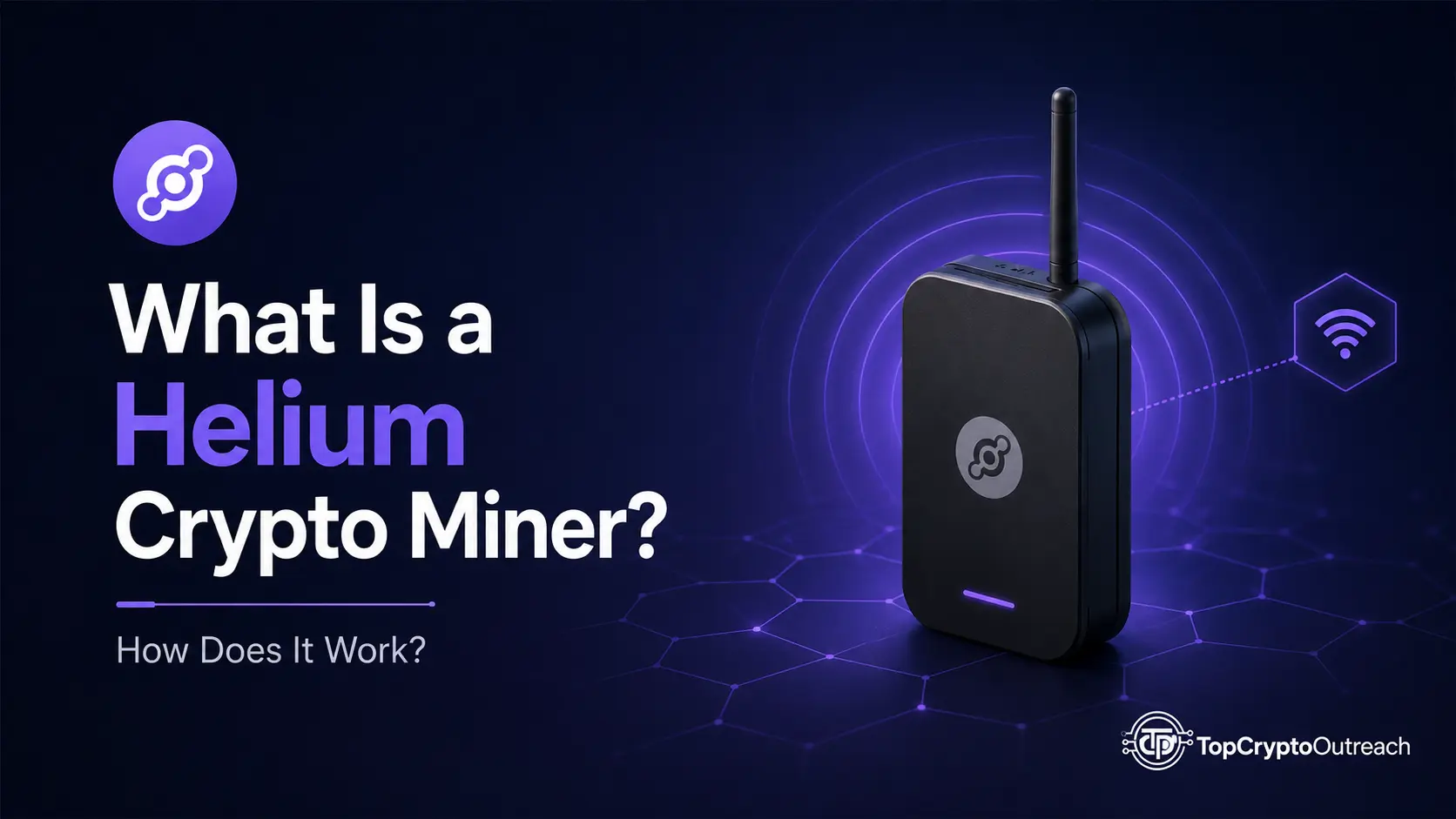
A Helium crypto miner is not a traditional mining machine that solves complex calculations like a Bitcoin ASIC. In current Helium terminology, the device is better understood as a Hotspot or wireless gateway that helps provide connectivity for the Helium Network. Depending on the network, a Hotspot may carry IoT device data or eligible mobile traffic. Operators can receive HNT for qualifying network contributions, but rewards vary and should never be treated as guaranteed income.
A Helium crypto miner is usually a Hotspot that provides wireless coverage or transfers data for the Helium Network. Helium currently supports an IoT LoRaWAN network and a Mobile carrier-offload Wi-Fi network, and eligible Hotspots can earn HNT for useful network activity rather than for proof-of-work computation.
What Is a Helium Crypto Miner?
The phrase “Helium crypto miner” comes from the way people commonly describe Helium Hotspots. The basic idea is easy to understand: instead of contributing large amounts of computing power, the operator contributes wireless infrastructure.
Helium currently powers two distinct wireless networks. The IoT side uses LoRaWAN for connected devices, while the Mobile side uses community-deployed Wi-Fi for mobile connectivity and carrier offload. This makes Helium very different from proof-of-work mining. A traditional proof-of-work miner contributes computational resources. A Helium Hotspot focuses on connectivity, coverage, and data transfer.
Is a Helium Miner the Same as a Helium Hotspot?
In everyday search language, “Helium miner” and “Helium Hotspot” are often used for the same general idea. However, the exact role depends on the network. An IoT Hotspot acts as a LoRaWAN gateway. It receives packets from compatible IoT devices and forwards them into Helium’s routing infrastructure. A Mobile Hotspot or converted Wi-Fi network provides wireless connectivity that can handle eligible mobile traffic. Before buying or setting up anything, first identify which Helium network you actually want to support.
How Does Helium Mining Work?
Helium mining is best understood as network participation rather than computational mining. A Hotspot is installed in a physical location and connected to the required internet and power infrastructure. It then provides wireless service according to its network type. When the deployment carries eligible traffic or meets current reward conditions, the operator may receive HNT.
Helium IoT Hotspots
The Helium IoT Network uses LoRaWAN, a wireless technology designed for connected devices that typically transmit relatively small amounts of data. Examples can include environmental sensors, asset trackers, agricultural monitors, or building sensors.
Current Helium documentation says a compatible LoRaWAN gateway can join the IoT Network as a Hotspot after completing the required software and onboarding process. The gateway forwards LoRaWAN packets through Helium infrastructure, and eligible Hotspots can earn HNT for device data they carry.
Helium Mobile Hotspots
Helium Mobile serves a different purpose. It operates as a decentralized carrier-offload network using community-deployed Wi-Fi infrastructure. A Mobile Hotspot can be placed in a venue where people spend time, such as a café, restaurant, shopping location, or transit area. Compatible existing Wi-Fi networks can also be onboarded to participate. Current Helium documentation states that Mobile Hotspots can receive HNT for eligible data transfer. Radio readiness and quality of service can also affect eligibility for carrier offload.
Helium Miner vs Traditional Crypto Miner
| Area | Helium Hotspot | Traditional Proof-of-Work Miner |
| Main purpose | Wireless coverage and data transfer | Blockchain computation |
| Typical hardware | Gateway or Wi-Fi radio | ASIC or GPU |
| Main resource | Useful connectivity | Computing power |
| Location importance | Often important | Usually less central |
| Reward basis | Eligible network contribution | Proof-of-work |
| Energy profile | Networking equipment | Often computation-intensive |
The comparison explains why calling a Helium Hotspot a “miner” can be misleading. Both systems can involve crypto incentives, but the work being performed is fundamentally different.
Helium IoT vs Helium Mobile
| Feature | Helium IoT | Helium Mobile |
| Main use | IoT device connectivity | Mobile connectivity and carrier offload |
| Wireless approach | LoRaWAN | Wi-Fi |
| Typical traffic | Device or sensor packets | Mobile data |
| Hotspot role | LoRaWAN gateway | Wireless access point or converted network |
| Reward focus | Eligible device data | Eligible mobile data transfer |
The right network depends on the service you want to provide. An IoT gateway positioned for sensor coverage is solving a different problem from a Mobile Hotspot installed where mobile users need additional wireless capacity.
How to Set Up a Helium Miner
The exact setup varies by hardware and network, so avoid following an old device guide without checking current requirements.
Step 1: Choose the Correct Hotspot Type
Start by deciding whether you want to support IoT or Mobile connectivity. For IoT, you need compatible LoRaWAN gateway hardware and the required Helium gateway software or onboarding method. For Mobile, you need compatible Wi-Fi infrastructure that can participate in the Mobile network.
Step 2: Prepare Hardware and Connectivity
A deployment generally needs power, internet access, suitable hardware, and any required antenna or radio equipment. The exact requirements depend on the Hotspot type and installation environment. Hardware should be chosen for the network role rather than simply because it is marketed as a crypto miner.
Step 3: Onboard the Hotspot
Current Helium IoT documentation describes onboarding as adding the Hotspot to a wallet and asserting its physical location. These transactions now use Helium’s Solana-based infrastructure. For new IoT gateways, current documentation lists separate Data Credit charges for adding a Hotspot and asserting its location. Protocol fees can change, so check current requirements before setup instead of relying on an old mining guide.
Step 4: Choose a Useful Location
Location is an important part of wireless network performance. For IoT, consider terrain, buildings, antenna position, and whether compatible devices need coverage nearby. For Mobile, Helium specifically describes commercial locations where people gather as useful deployment environments. A rooftop or high antenna may help in some IoT deployments, but placement should match the network goal. Height alone does not guarantee better rewards.
Step 5: Monitor the Deployment
After setup, check connectivity, uptime, data transfer, network status, and hardware health. A Hotspot is infrastructure, so reliable operation matters. Network contribution depends on more than simply owning and powering the device.
What Affects Helium Hotspot Rewards?
There is no fixed amount that every Helium Hotspot earns. Potential rewards depend on the network, current protocol rules, eligibility, useful network activity, data transfer, deployment quality, and local demand.
For Mobile Hotspots, current documentation ties rewards to eligible data passed through the Hotspot and notes that radio readiness and quality of service can affect participation. For IoT, current Helium documentation says onboarded gateways can earn HNT for device data they carry. That makes old daily-income screenshots a weak basis for planning a new deployment. HNT market value can also change independently of network activity, so Hotspot rewards should not be treated as guaranteed returns.
How Much Does a Helium Miner Cost?
The total cost depends on the type of Hotspot and installation. Common cost categories include the Hotspot or gateway itself, antenna equipment, cables, mounting hardware, internet access, electricity, installation, maintenance, and current network onboarding fees.
Current Helium documentation uses Data Credits for network usage and certain onboarding actions. Data Credits have a fixed USD-denominated value within the network, while specific onboarding charges depend on the type of entity being added. Because hardware prices, installation needs, and protocol fees can change, it is better to budget by category than rely on one universal “Helium miner cost.”
Examples of Helium Hotspot Use
Environmental Monitoring
Imagine a group of outdoor temperature and air-quality sensors sending small LoRaWAN packets. A nearby Helium IoT gateway can receive those messages and forward them through the network. The useful service is connectivity for the sensors, not computational mining.
Asset Tracking
A logistics operator may use compatible tracking devices that periodically send status or location-related data. LoRaWAN gateways in suitable coverage areas can help carry those packets. This example shows why useful wireless coverage matters more than raw computing power.
Smart Agriculture
A farm could deploy low-power sensors for soil conditions, temperature, water systems, or equipment monitoring. An IoT gateway can provide a communication path where LoRaWAN suits the deployment.
Mobile Coverage at a Busy Venue
A café or retail location with steady foot traffic can be a logical Mobile deployment environment. Helium’s Mobile documentation emphasizes commercial locations where slower-moving users gather because those areas can create practical demand for wireless offload.
Common Helium Mining Misconceptions
The first misconception is that a Helium miner works like a Bitcoin miner. It does not. Helium Hotspots contribute to wireless networking rather than competing through computational hash power. Another mistake is assuming every Hotspot earns the same amount. Deployment, traffic, network type, eligibility, and current reward rules can all matter.
Expensive hardware also does not guarantee stronger results. A technically impressive installation that provides little useful network service may not perform the role an operator expected. Old guides create another problem. Helium’s current system includes separate IoT and Mobile networks, Solana-based account infrastructure, and updated onboarding processes, so tutorials written for earlier versions may no longer describe the present system accurately. Finally, rewards are not guaranteed income. A Hotspot is network infrastructure first. Crypto incentives depend on qualifying participation, and protocol conditions can change.
Frequently Asked Questions
What Is a Helium Crypto Miner?
A Helium crypto miner is generally a wireless Hotspot or gateway that contributes coverage or data transfer to the Helium Network. It differs from proof-of-work mining because it provides wireless infrastructure instead of computational hash power.
Does Helium Mining Still Work?
Yes, Helium still rewards eligible network participation, but the current model should be understood through its IoT and Mobile networks. Older explanations of Helium mining may no longer accurately describe current onboarding or reward mechanics.
Does a Helium Miner Use a Lot of Electricity?
A Helium Hotspot is generally networking or radio equipment rather than a power-intensive proof-of-work mining machine. Actual electricity use depends on the specific gateway, radio, accessories, and installation.
Can a Helium Miner Work Anywhere?
A compatible Hotspot may technically operate in many locations, but useful deployment depends on network type, regional radio requirements, internet access, coverage conditions, and actual demand. Helium’s IoT documentation supports multiple regional frequency plans, so hardware and configuration must match the deployment region.
How Much HNT Can a Helium Miner Earn?
There is no guaranteed HNT amount for a Helium Hotspot. Rewards can vary according to eligible network activity, data transfer, deployment conditions, and current protocol rules.
Do You Need a Special Antenna for a Helium Hotspot?
The antenna requirement depends on the Hotspot type, radio technology, hardware, and intended coverage. Use equipment that is compatible with the device and suitable for the deployment rather than assuming the largest antenna is automatically best.
Final Thoughts
A helium crypto miner makes more sense once you stop thinking of it as a conventional mining rig. Helium Hotspots are pieces of wireless infrastructure designed to provide useful IoT or mobile connectivity, with HNT rewards available for eligible network participation. Before buying hardware, identify whether you want to support Helium IoT or Helium Mobile, check current compatibility and onboarding rules, and consider whether your location can provide useful coverage or traffic. Hardware price alone does not determine the value of a deployment. Current network utility, reliable operation, and appropriate placement matter far more than old promises about passive mining income.